
The Tomato’s history can be traced back to the Mayans and Aztecs around 700 A.D. It is because of this that it is believed that the tomato is native to the Americas. A mutation was likely responsible for changing the small two-chambered wild tomatoes into the larger, lumpy, multi-chambered fruits that represent the vast majority of today’s tomatoes. It is the large tomatoes that were nurtured and developed by Central American farmers. The Aztecs named the plant “xitomatl”, or “large tomatl”.
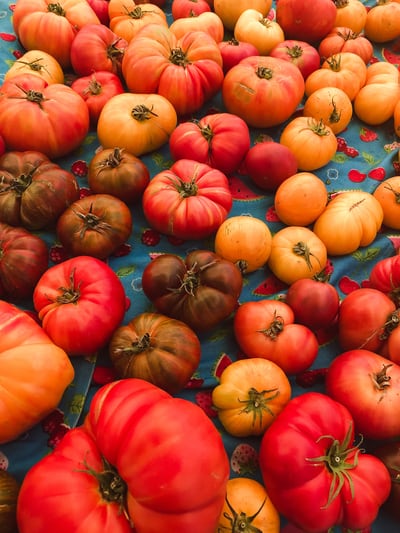
In 16th century Europeans discovered this fruit when the early explorers landed in the Americas and brought them back to their homeland. Throughout Southern Europe, the tomato was embraced and invited into the kitchen. As it travelled north to Great Britain, the tomato encountered resistance because of its resemblance to the Wolf Peach, which is poisonous.
The leaves of the tomato plant are actually poisonous, as are the leaves of all fruits in the deadly nightshade family. This family includes potatoes, peppers and eggplant as well.
Due to the fact that the dishes used by the elite and wealthy of Europe were made of pewter with a high lead content in the 1500’s, many people died after eating tomatoes. Apparently the acidity of the tomato has an adverse reaction to lead…. Poor people, who ate off of plates made of wood, did not have that problem. Therefore, tomatoes were only eaten by poor people until the 1800’s, especially by Italians. Think pizza!
Tomatoes have since become a staple item in most kitchens throughout the world. Every part of the world has its own tomato story. Tomatoes have a huge array of sizes, colors, flavors and uses. Tomatoes have had the biggest impact on Americans though. We consume over 12 million tons of tomatoes each year in one form or another! For example, in the form of ketchup, soups, sauces, on burgers, on sandwiches or as bite sized snacks.






 Nomadic Farmer